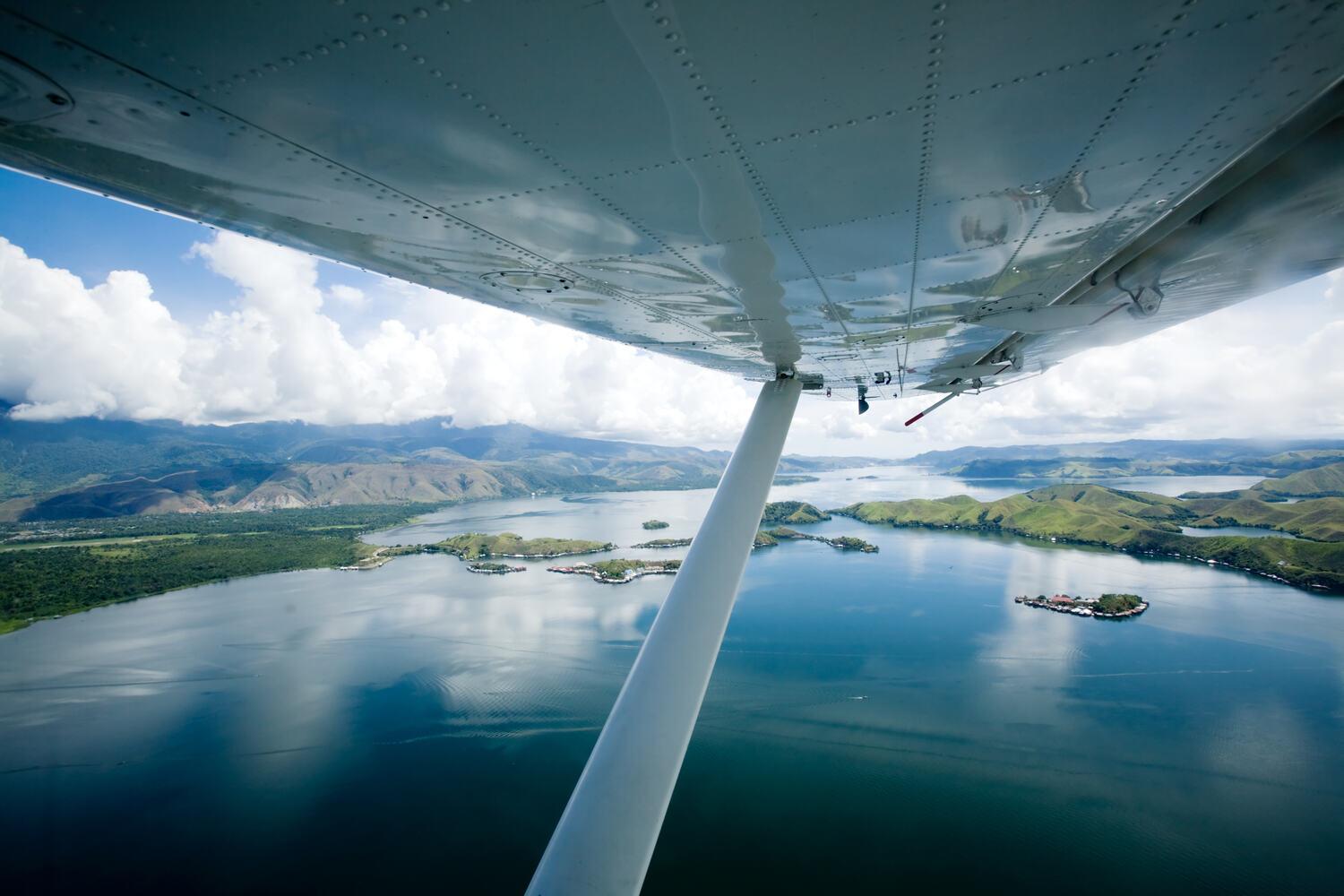
Seaplanes & Amphibians
What is it like to own a floatplane?
Every lake becomes an airport, and every part of ownership gets harder. A category bought for joy rather than efficiency, and honest about it.
Floats change everything about an airframe, and mostly in the direction of costing you something. Expect to lose 150 to 400 lb of useful load and 10 to 20 knots of cruise against the same aircraft on wheels. Amphibians — floats with retractable wheels — cost more of both, because you are carrying the landing gear as well.
In exchange, the map changes. Water is everywhere, and in large parts of the country it is better infrastructure than the runways are. That is the trade, and people who make it rarely regret it.
What gets harder
- Corrosion, permanently — salt water especially, but fresh water is not innocent
- Float maintenance: compartments need pumping, and they need inspecting for leaks and damage
- Insurance, which wants a rating and time in type and will say so firmly
- Winter storage in most of the country, and the seasonal swap between floats and wheels
- Docking and hangarage, which is its own problem and often not at an airport
The rating itself is one of the shortest and most enjoyable in aviation — a handful of hours for most already-certificated pilots. The skill that takes longer is reading water: glassy surfaces, swell, current, and knowing which lake is legal to land on, which varies enormously by state and by individual body of water.