

Read the logbooks before you travel
Ask for scans before you buy a plane ticket. A three-year gap or a missing 337 tells you more about an airplane than any photo set will, and it costs nothing to find out.
- Time
- A few evenings
- Cost
- Free
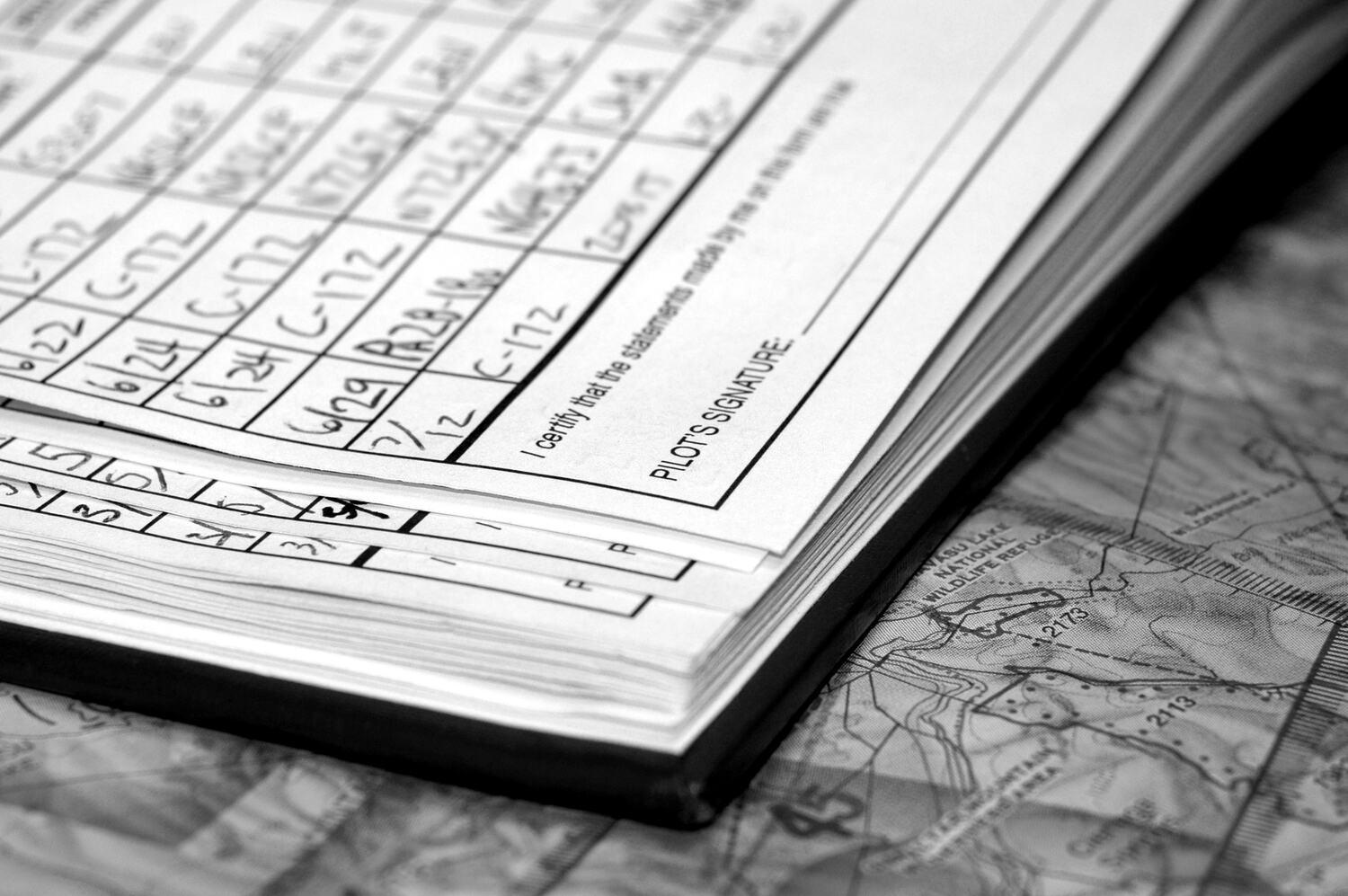
The logbooks are the airplane’s medical history and its provenance rolled together. An airplane with incomplete logs is worth materially less than the same airplane with complete ones — often twenty percent less, sometimes more. A seller who will not send scans before you travel is telling you something.
What you are reading for
You are not doing a mechanic’s job. You are looking for the handful of patterns that tell you whether this airplane is worth spending pre-buy money on.
- Continuity — does every year carry an annual sign-off, or are there gaps?
- Long idle periods — an airplane that sat for four years has its own set of problems
- Major repairs — any FAA Form 337 means significant work was done; read it
- Damage history — look for the words describing it, not just an unticked box
- AD compliance — is there a current signed list, or are you being told it is all done?
- Recent work — a flurry of expensive items just before sale is worth understanding
Check the registry while you are at it
The FAA registry is public and free. Look up the N-number and confirm the registration is current, that the registered owner matches the person selling it, and that make, model and serial number match the logbooks. A mismatch is not necessarily fraud — LLC ownership, estates and recent sales all produce them — but every one needs an explanation before money moves.
If you are buying new, there are no logbooks — and that is worth less than it sounds
A new airplane has no history to read, which feels like it removes the risk. It moves it. You are trading a known history for an unknown one: early-life defects, a production run with its own quirks, and avionics software still being revised. Nobody has found this airplane’s problems yet, because the person who is going to find them is you.
What replaces the logbook read is paperwork of a different kind, and it deserves the same evening. Read the signed options list line by line against what you were quoted. Read the warranty for what is actually covered, for how many months and how many hours, what the deductible is, and whether it transfers to the next owner — a transferable warranty is worth real money at resale. Read the maintenance programme the manufacturer would like you on, and find out what it costs in year three rather than year one.
Then start keeping the logbook you will one day be selling. The habits that make a used airplane worth twenty percent more than the identical one beside it are set in the first hundred hours.
Close, well-lit shot of an open logbook page with legible handwriting and an IA signature. The photo we use now is black and white and a bit arty; a plainer, sharper one would serve the instruction better.
- Get scans before you book travel — no exceptions
- Read for continuity, idle periods, 337s and AD compliance
- Verify the registry entry matches the logbooks and the seller
- Treat incomplete logs as a price issue, not just a paperwork issue