The buyer’s glossary
The words in the listing and the logbook, in plain language — and the ones where misunderstanding costs real money.
Aviation has a dense private vocabulary, and an aircraft listing uses about forty words of it in the first paragraph. Most glossaries define these terms the way a textbook would. This one defines them the way a buyer meets them — because somebody looking up SMOH is reading an advert, not studying for a written test.
24 of the 64 terms below are marked in red. Those are the ones where getting the meaning wrong costs money rather than just sounding awkward at the fuel pump.
Buying and paperwork
- 337 formFAA Form 337, Major Repair and Alteration
- The record of a major repair or alteration. A stack of 337s is not automatically bad — most are avionics and STC installations — but each one is a question worth asking.See also: stc, damage history
- Airworthiness certificateCosts money
- The certificate saying the aircraft met its type design when issued. It does not expire on a date, but it is only valid while the aircraft is maintained per the regulations — inspections done, applicable ADs complied with. An aircraft can be perfectly registered and completely unairworthy.See also: registration, annual inspection, ad airworthiness directive
- Damage historyCosts money
- Any significant repair after an incident. Properly documented and properly repaired, it reduces value but does not prevent a sale. Undisclosed and discovered at the pre-buy, it ends one.See also: 337 form
- Escrow
- A neutral third party holding the money, running the title search and filing the registration with the FAA, releasing funds only when everything lines up. A few hundred dollars on a six-figure transaction.See also: title search
- LienCosts money
- A claim against the aircraft, usually from a loan or an unpaid maintenance bill. It attaches to the airplane, not the person — buy an aircraft with an unreleased lien and it is now your problem.See also: title search, escrow
- N-number
- The registration painted on the tail. It follows the owner, not the airframe — people change them, and released numbers get reassigned. Never use one as a permanent identifier for an aircraft.See also: registration, serial number
- Pre-buy inspectionCosts money
- An inspection commissioned by the buyer, by a mechanic the buyer chose, looking for the things that decide whether to buy. Not the same as an annual, and not something the seller should be arranging.See also: annual inspection, squawk
- Registration
- The record of who owns the aircraft, like a title on a car. Separate from airworthiness, and it does need renewing. A valid registration says nothing whatever about the condition of the airplane.See also: airworthiness certificate, title search
- Serial number
- The manufacturer’s number for that specific airframe, stamped on a data plate. Unique within a manufacturer and model, but not globally — thousands of homebuilts carry serial "001".See also: n number
- Squawk
- A defect or discrepancy. The squawk list from a pre-buy is the negotiation — decide in advance which items are price adjustments and which end the deal.See also: pre buy inspection
- STCSupplemental Type Certificate
- Approval for a modification to a type-certificated aircraft — a different engine, an avionics installation, bigger tires, tip tanks. The paperwork must come with the airplane; an STC installation without its documentation is a problem to fix.See also: 337 form, type certificate
- Title searchCosts money
- A search of the FAA records for liens, unreleased security interests and gaps in the chain of ownership. Costs a couple of hundred dollars, and aircraft liens are common enough that skipping it is genuinely reckless.See also: escrow, lien
- Type certificate
- The FAA approval of an aircraft design. The type certificate data sheet lists the approved configurations, weights and equipment for that design, and is the authority on what the aircraft legally is.See also: stc
Engines and maintenance
- 100-hour inspection
- An additional inspection required when an aircraft is used for hire or for flight instruction provided by the aircraft’s provider. Privately operated aircraft generally need only the annual.See also: annual inspection
- ADAirworthiness DirectiveCosts money
- A legally mandatory instruction from the FAA to correct an unsafe condition on a type. Not optional, not negotiable, and compliance must be recorded. Some are one-time; some recur forever and become part of the operating cost.See also: service bulletin, annual inspection
- Annual inspectionCosts money
- The yearly inspection required for an aircraft with a standard airworthiness certificate. The quoted price is for the inspection; what varies by a factor of five is what gets found and has to be fixed.See also: 100 hour inspection, pre buy inspection
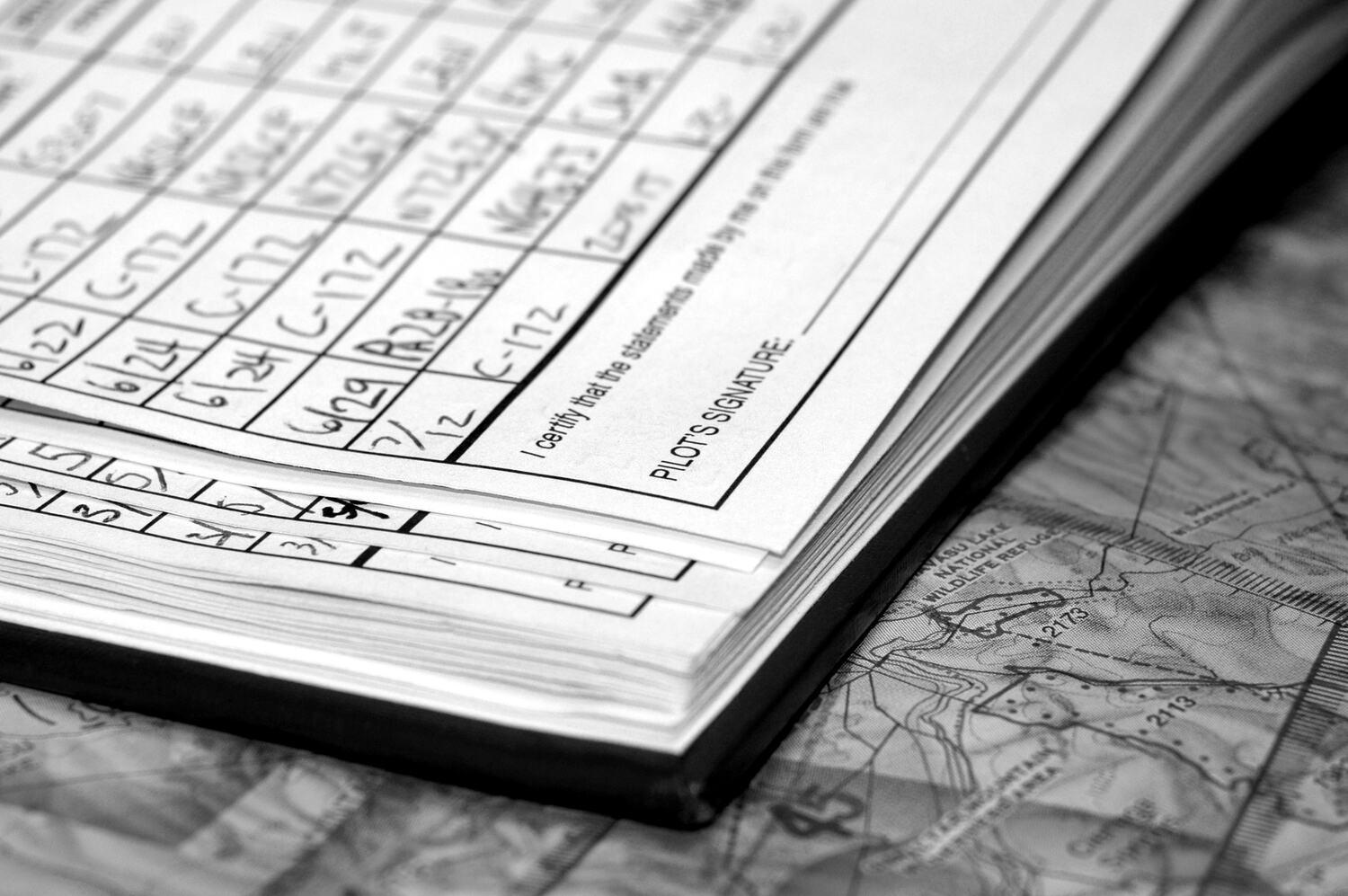
- Borescope
- A camera inserted through the spark plug hole to look at cylinder walls and valves. Finds things a compression check cannot. Any pre-buy on a piston engine should include one.See also: compression check, pre buy inspection
- Compression check
- A measure of how well each cylinder holds pressure, written as something over 80. Useful, frequently over-interpreted, and far less informative on its own than a borescope inspection and where the air is escaping.See also: borescope
- LogbooksCosts money
- The maintenance history — airframe, engine, propeller. Gaps reduce value more than owners expect, because a buyer cannot verify what is not written down. Ask for scans before you travel to see an airplane.See also: 337 form, damage history
- Making metalCosts money
- Finding metal particles in the oil filter or screen. Ends the conversation about running on condition, and usually means the engine is coming apart.See also: oil analysis, overhaul
- Oil analysis
- Laboratory testing of an oil sample for wear metals. Only useful as a trend across many samples — a single result tells you very little, and a run of results tells you a great deal.See also: on condition, making metal
- On condition
- Running an engine past its recommended TBO based on monitoring rather than the calendar — oil analysis, filter inspection, compressions, borescope, engine monitor data. Legitimate and common. It is a programme, not an opinion.See also: tbo, oil analysis
- OverhaulCosts money
- Disassembling the engine and restoring it to defined limits. A field overhaul is done by a shop and keeps the engine’s total time; a factory overhaul or remanufacture is done by the manufacturer, with a warranty, and a reman zero-times the log.See also: top overhaul, sfrm, tbo
- Preventive maintenance
- A specific, limited list of tasks an owner-pilot may legally perform on an aircraft they own and operate — oil changes, tires, certain bulbs. The list is narrower than hangar conversation suggests, and the work has to be logged properly.See also: annual inspection
- Service bulletin
- A manufacturer’s recommendation. Not mandatory for a privately operated aircraft unless an AD makes it so — but insurers, buyers and mechanics all notice when they have been ignored.See also: ad airworthiness directive
- SFRMSince Factory Remanufacture
- Hours since the manufacturer remanufactured the engine. A reman is zero-timed — the logbook starts again — which is worth more on resale than a field overhaul that keeps accumulating total time.See also: smoh, overhaul
- SMOHSince Major OverhaulCosts money
- Hours flown since the engine was last overhauled. The single biggest variable in the price of two otherwise similar airplanes.See also: tbo, sfrm, ttsn
- TBOTime Between Overhauls
- The manufacturer’s recommended interval between engine overhauls, in hours and usually also in calendar years. For a privately operated aircraft it is guidance rather than a legal limit — engines are run on condition. It is still the number the whole market prices against.See also: smoh, on condition, overhaul
- Top overhaulCosts money
- Cylinders, valves and pistons only — everything above the case. Leaves the crankshaft, bearings and camshaft untouched, which is where the expensive failures live. "Top overhauled at 1,800 SMOH" in an advert is a sentence that invites questions.See also: overhaul
- TTSNTotal Time Since New
- Total hours on the airframe since it was built. Matters, but far less than engine time and condition.See also: smoh
Performance and weight
- Density altitudeCosts money
- What the air feels like to the airplane once temperature and pressure are accounted for. On a hot day at a high field, a 1,500 ft takeoff roll can become 2,900 ft. It is the number behind a large share of takeoff accidents.
- Full-fuel payloadCosts money
- Useful load minus a full tank of fuel. For many four-seat airplanes this comes out at two adults and a small bag, which is why "four seats" and "four people" are different claims.See also: payload, useful load
- Gross weight
- The maximum weight the aircraft is certified to operate at. Some airframes have an STC that raises it; most do not, and exceeding it is both illegal and a genuinely bad idea on a hot day.See also: useful load
- IASIndicated Airspeed
- What the airspeed indicator shows. What the pilot flies by, and what the aircraft’s limitations are set in.See also: tas
- PayloadCosts money
- What is left of the useful load once the fuel is in. The number that decides whether an airplane does your trip, and the one buyers most often discover too late.See also: useful load, full fuel payload
- Service ceiling
- The altitude at which the aircraft can still manage a 100 ft per minute climb. A practical ceiling rather than an absolute one, and reached far sooner at weight on a warm day.
- TASTrue Airspeed
- Actual speed through the air, as opposed to what the airspeed indicator reads. TAS increases with altitude for the same indicated speed, which is why cruise figures are always quoted with an altitude.See also: ias
- Useful loadCosts money
- Maximum gross weight minus empty weight. Everything you can put in: fuel, people, baggage. Varies by hundreds of pounds between two examples of the same model depending on avionics, paint and interior, so read the actual weight and balance for the actual airplane.See also: payload, gross weight, weight and balance
- Vs0 / Vx / Vy / Va / Vne
- Standard speed references: stall in landing configuration, best angle of climb, best rate of climb, manoeuvring speed, and never-exceed. Manoeuvring speed varies with weight — lighter means lower, which is the opposite of what people assume.
- Weight and balanceCosts money
- The calculation of total weight and where the centre of gravity sits. Both matter — an aircraft within weight but outside its CG range handles badly and may be unrecoverable from a stall.See also: gross weight, useful load
Airframe and systems
- ADS-BAutomatic Dependent Surveillance – Broadcast
- The aircraft broadcasting its position. ADS-B Out is required in much of the airspace system; ADS-B In receives traffic and weather and is optional but genuinely useful.See also: mode s
- Complex
- An aircraft with retractable landing gear, flaps and a controllable-pitch propeller together. Requires an endorsement, and your insurer will want more hours than the regulation does.See also: high performance, endorsement
- Constant-speed propeller
- A propeller whose blade pitch adjusts to hold a set RPM. Adds a lever and an order of operations, and an overhaul interval in both hours and calendar years.See also: complex
- Glass panel
- Electronic flight displays in place of mechanical instruments. Better situational awareness and, in a certificated installation, a large invoice. Check who supports the specific boxes fitted before you value them.See also: steam gauges
- Ground loopCosts money
- An uncommanded rotation on the ground, usually in a taildragger, usually ending in a wingtip and a propeller strike. Rarely hurts anyone; reliably costs five figures because of the engine inspection.See also: taildragger, prop strike
- High performance
- An aircraft with an engine above a defined horsepower threshold. Also an endorsement, also an insurance conversation.See also: complex, endorsement
- Known iceFlight Into Known IcingCosts money
- Certification and equipment permitting flight into forecast icing. Rare and expensive on light aircraft. An aircraft with de-ice boots is not automatically approved for known ice — check the certification, not the equipment.
- Mode S
- A transponder mode using a unique 24-bit address per aircraft. In the US that address is derived from the N-number, so it changes when the registration does.See also: adsb, n number
- Prop strikeCosts money
- Any contact between the propeller and the ground or an object. Triggers a mandatory engine teardown inspection on most engines, which is why a minor-looking incident becomes a very large bill.See also: ground loop
- Steam gauges
- Traditional mechanical instruments, as opposed to a glass panel. Not automatically a problem — many are reliable and cheap to maintain — but an obsolete panel is a deduction at resale, not a neutral.See also: glass panel
- TaildraggerConventional gear
- Main wheels ahead of the centre of gravity, with a tailwheel. Any swing that starts tends to grow rather than damp out, which is the ground loop. Needs an endorsement and regular currency.See also: ground loop, endorsement
- Turbocharged / turbonormalised
- Forced induction that maintains manifold pressure at altitude, letting the aircraft keep its speed in the high teens and above. Adds heat, which is what kills cylinders and exhaust components, and adds oxygen to your routine.See also: density altitude
Certificates and rules
- A&P / IAAirframe and Powerplant mechanic / Inspection Authorization
- An A&P maintains aircraft. An IA is an A&P with additional authorisation, required to sign off an annual inspection and approve major repairs. Finding a good one before you buy matters more than most buyers realise.See also: annual inspection
- BasicMed
- An alternative to holding a current medical certificate for certain pilots and operations, with its own conditions on the aircraft and the flight. Conditions and limits have been revised over time — check the current rule.See also: medical certificate
- Currency
- The recent experience the regulations require for what you intend to do — carrying passengers, night flying, instrument approaches. Distinct from proficiency, which is whether you are actually any good at it right now.See also: flight review
- Endorsement
- An instructor’s logbook signature confirming training in something specific — tailwheel, high performance, complex, high altitude. Training rather than a test, and the insurance requirement usually exceeds the regulatory one.See also: complex, high performance, taildragger
- ExperimentalCosts money
- An airworthiness category covering amateur-built and several other purposes. Carries operating limitations issued with the certificate — commonly no carriage for hire — which are part of the aircraft and differ between airframes.See also: repairman certificate, airworthiness certificate
- Flight review
- The review required within the preceding 24 calendar months to act as pilot in command. The certificate does not expire; this is what keeps it usable.See also: currency
- LeasebackCosts money
- Putting your aircraft on a flight school or operator’s line in exchange for an hourly payment. Reduces the cost of ownership rather than eliminating it, and turns the airplane into a small business with real tax complexity.See also: part 135
- Light sport
- An aircraft category and a pilot certificate, with their own weight, speed and operating limits. The sport pilot certificate can in some cases be exercised on a driver’s licence in place of a medical. The definitions have been revised and are worth checking currently.See also: basicmed
- Medical certificateCosts money
- Issued in three classes by an aviation medical examiner. Third class is what most private pilots hold. If there is any reason yours might be complicated, consult an examiner informally before formally applying — a denial closes off other routes.See also: basicmed
- Part 135
- The rules for commuter and on-demand commercial operations — charter. Stricter maintenance, crew and operational requirements. Relevant to an owner mainly through leasebacks and management arrangements.See also: part 91, leaseback
- Part 91
- The general operating rules covering private flying. Less prescriptive than the commercial parts — which is why TBO is advisory for a private owner and mandatory for many commercial operators.See also: part 135, tbo
- Repairman certificateCosts money
- Allows the builder of an amateur-built aircraft to perform its annual condition inspection. It belongs to the builder and does not transfer with the aircraft — buy someone else’s homebuilt and you will need an A&P.See also: experimental
Type a tail number and get the registry record decoded rather than abbreviated.
N-number lookupDefinitions here are written for orientation, not as authority. Anything regulatory that you would act on — certificate privileges, medical rules, maintenance obligations — should be checked against the current regulation and your mechanic or instructor.